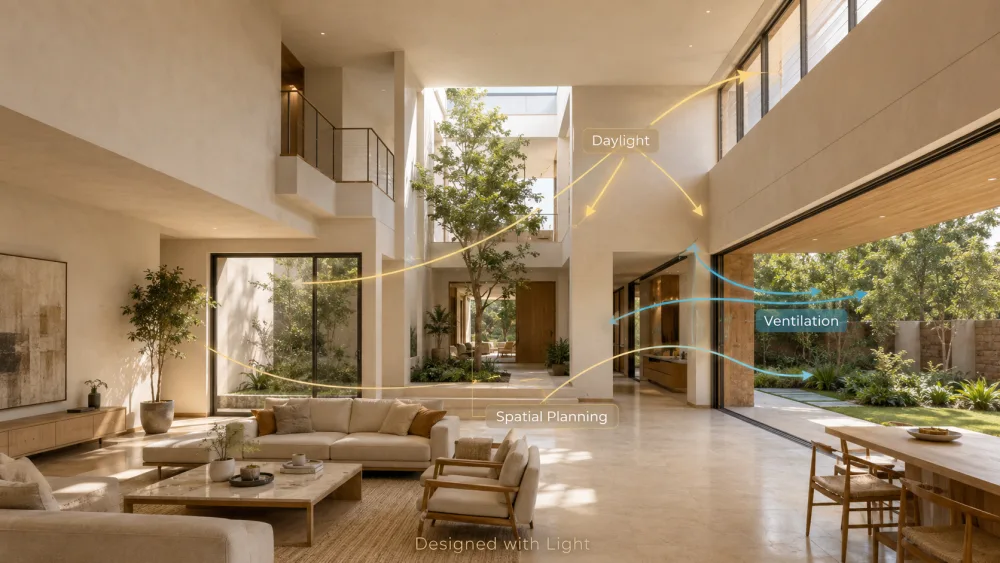
Why Does My Home Feel Dark During the Day? How Better Design Can Bring in Natural Light
Have you ever walked into your living room at noon only to switch on the lights? If so, you're not alone. It's a surprisingly common issue in homes across Delhi NCR. While many assume the solution is simply adding larger windows or brighter light fixtures, the real answer often lies in the way the home has been designed. As a home renovation architect in Delhi, we've found that daylight isn't just about the size of an opening—it's about how light moves through a space. Orientation, layout, material choices, and even the placement of a staircase can influence how bright your home feels throughout the day.
The good news? Many of these issues can be improved without rebuilding your entire house.
Why Does My Home Feel Dark During the Day?
A home can receive plenty of sunlight outside while still feeling dim indoors. This usually happens because daylight is being blocked, absorbed, or prevented from reaching deeper parts of the house.
The challenge isn't always the amount of sunlight available—it's how effectively your home captures and distributes it.
Quick Answer:
A home feels dark during the day because of factors like poor window placement, blocked sunlight, deep room layouts, heavy finishes, and inadequate ventilation. Thoughtful architectural planning can significantly improve natural light without depending entirely on artificial lighting.

1. Your Windows May Be in the Wrong Place
Many people believe that adding larger windows automatically creates brighter interiors. In reality, placement matters far more than size.
A large window facing a neighbouring wall or another building may contribute very little daylight. Meanwhile, a carefully positioned window facing an open area can illuminate an entire room.
When designing or renovating a home, architects study the movement of the sun throughout the day to determine where daylight can be captured most effectively.

2. The Layout Is Preventing Light from Travelling
Natural light doesn't stop at the window. It needs pathways to travel through your home.
Long corridors, multiple enclosed rooms, oversized partitions, and poorly positioned storage units often create dark pockets that never receive daylight.
Sometimes, opening up a wall, widening a doorway, or introducing a visual connection between spaces allows light to spread much deeper into the home.

3. Your Home May Be Facing the Wrong Direction
Orientation has a significant impact on indoor brightness.
Homes in Delhi NCR experience different qualities of sunlight depending on which direction they face. East-facing spaces enjoy soft morning light, while north-facing rooms receive consistent daylight throughout much of the year. West-facing openings often introduce harsh afternoon glare rather than comfortable illumination.
Good architecture balances these conditions rather than simply maximizing glass.

4. Dark Materials Can Absorb More Light Than You Think
Flooring, wall colour, ceilings, and furniture all influence how bright a room feels.
Dark wood finishes, charcoal walls, heavy curtains, and matte black surfaces absorb daylight instead of reflecting it. Lighter colour bounce natural light around the room, making spaces appear larger and more welcoming.
This doesn't mean every home needs white walls. The right balance of materiality can preserve warmth while improving brightness.

5. Furniture Could Be Blocking Daylight
Sometimes the architecture isn't the problem at all.
Large wardrobes placed beside windows, tall bookshelves, oversized sofas, or dense indoor partitions can interrupt the flow of natural light.
Rearranging furniture often produces a noticeable improvement before any renovation begins.

6. Skylights and Courtyards Can Transform Dark Interiors
For homes where side windows aren't possible, daylight can still enter from above.
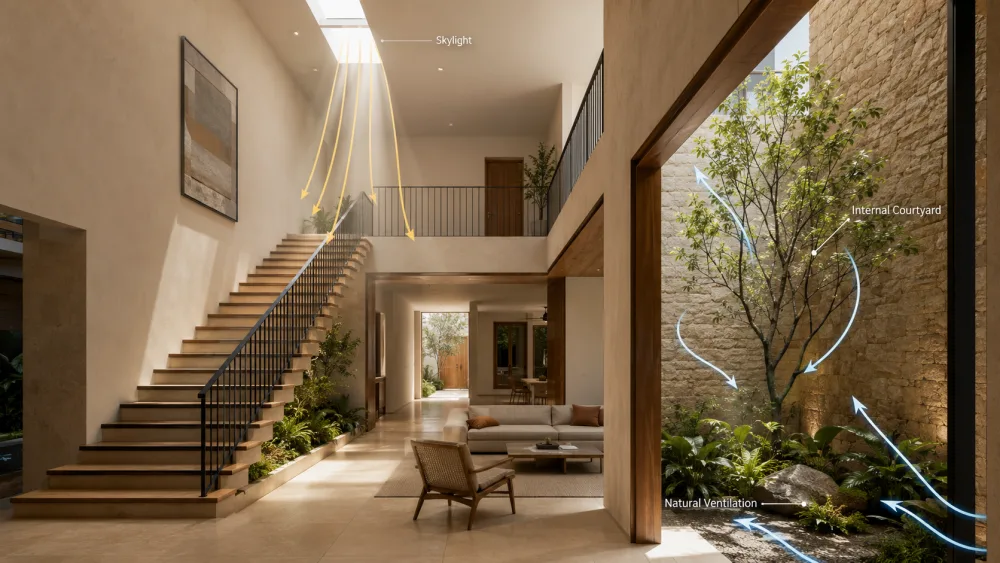
Courtyards, skylights, double-height spaces, and light wells have long been used in Indian architecture to bring daylight into the heart of a home. These elements not only improve brightness but also enhance ventilation and create a stronger connection with nature.
In renovation projects, even a modest skylight can dramatically change how a staircase, hallway, or family area feels throughout the day.
7. Artificial Lighting Should Support, Not Replace, Daylight
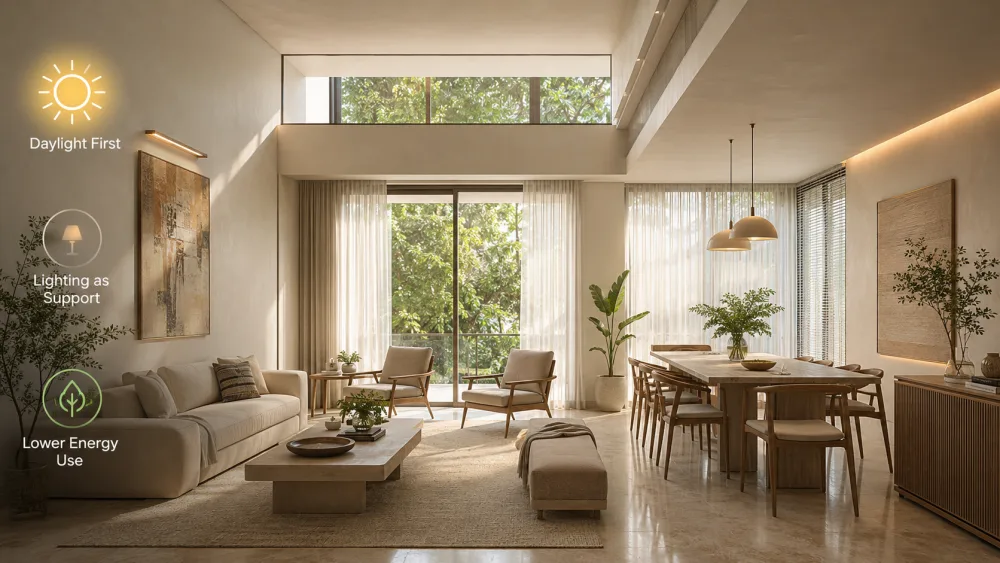
A well-designed home shouldn't rely on artificial lights from morning until evening.
Natural daylight improves comfort, supports our daily rhythms, reduces electricity consumption, and allows colour and materials to be experienced as they truly are.
Thoughtful architectural planning ensures that artificial lighting becomes an enhancement rather than a necessity during daylight hours.
When Should You Consult a Home Renovation Architect in Delhi?
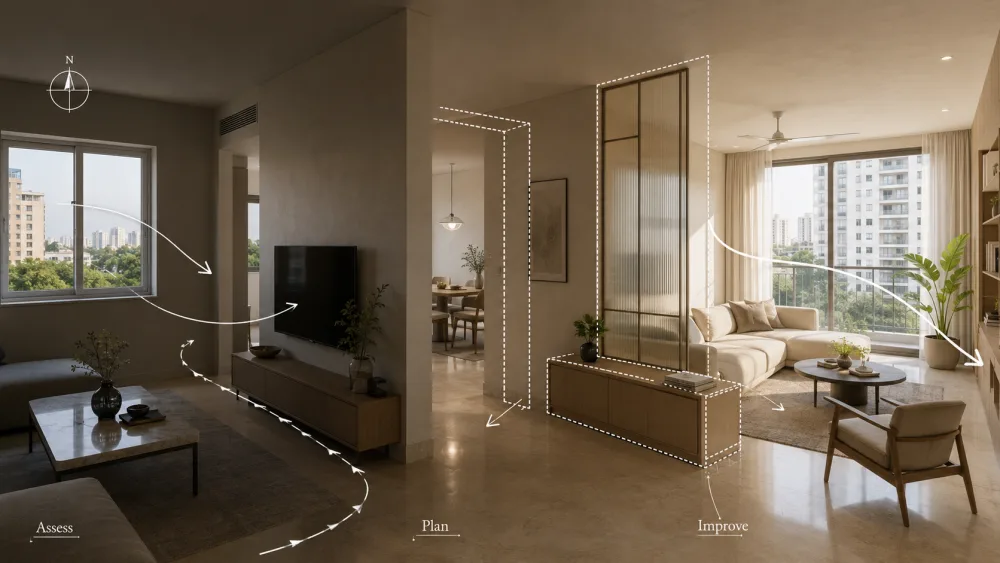
If you constantly keep lights on during the day, notice certain rooms always feel gloomy, or are planning to renovate your home, it's worth evaluating whether the issue is architectural rather than decorative. A home renovation architect in Delhi can study your home's orientation, circulation, openings, and spatial planning to identify practical ways of bringing in more natural light. Often, relatively small design interventions can make a substantial difference without requiring a complete reconstruction.
Designing Homes That Work With Light
Natural light isn't a luxury—it's one of the most important building materials available to us. When considered early in the design process, it shapes how a home feels, functions, and evolves over time.
Whether you're building a new house or renovating an existing one in Delhi NCR, thoughtful architectural decisions can transform dark interiors into bright, comfortable spaces that require less artificial lighting and feel connected to the outdoors.
If you're planning a renovation or a new home, we'd be happy to discuss how daylight, ventilation, and spatial planning can improve the way you experience your space. Start a conversation with New Arch Studios and let's design a home that truly works with light.