
Why Does My Home Look Cluttered Even After Cleaning? 10 Interior Design Solutions
You clean every room, organise the shelves and put everything back in place—yet your home still feels untidy and visually crowded.
The problem may not be your cleaning routine. In many homes, clutter is caused by poor storage planning, oversized furniture, interrupted circulation and too many visible objects. A home can be perfectly clean and still look cluttered if its interior design does not support everyday living.
Here are the most common reasons—and practical ways to solve them.

1. Your Storage Does Not Match Your Lifestyle
Generic cabinets may provide storage, but they do not necessarily accommodate the things you use every day. Shoes collect near the entrance, chargers remain visible and frequently used items gather on tables.
The solution is to plan storage around your daily habits. Include an entrance console for keys and bags, concealed shoe storage, charging drawers, appliance cabinets and dedicated spaces for children’s belongings.
Good storage should make putting things away effortless.
2. Too Many Items Are Visually Exposed
Open shelves and glass cabinets can look beautiful, but displaying too many objects creates visual noise. Even neatly arranged belongings can make a room feel crowded.
Use a balance of open and closed storage. Display a few carefully selected objects while keeping everyday items behind clean shutters. Matching containers and a consistent colour palette can also create a calmer appearance.

3. The Furniture Is Too Large for the Room
Oversized sofas, bulky beds and deep storage units reduce open floor space. When furniture occupies most of the room, the interior can feel cluttered regardless of how clean it is.
Choose furniture according to the room’s actual dimensions. Compact pieces, raised furniture and designs with built-in storage can improve openness without compromising comfort.
Always measure the room and circulation space before purchasing furniture.
4. The Layout Interrupts Movement
If you need to move around tables, chairs or storage units to cross a room, the furniture layout may be creating unnecessary congestion. Maintain clear walking paths between entrances, seating areas and frequently used spaces. Avoid placing furniture directly in circulation routes. A well-planned layout makes a home feel organised, comfortable and more spacious.

5. Every Surface Has Something on It
Coffee tables, kitchen counters, bedside tables and consoles often become collection points for everyday belongings.
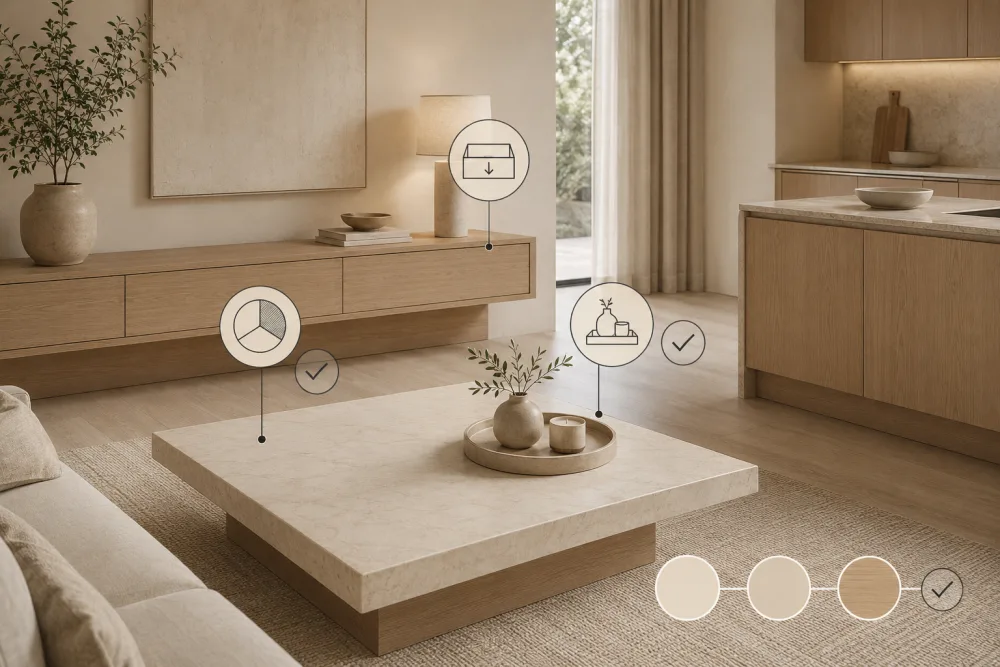
Try keeping at least one-third of each visible surface empty. Group smaller objects on trays and provide nearby drawers for things that do not need to remain on display. Empty space is an important part of good interior design.
6. There Are Too Many Colours and Patterns
Multiple finishes, contrasting furniture, busy curtains and different decorative patterns can make a room feel visually restless. Create a controlled palette of two or three main colours. Repeat similar materials and finishes throughout the room to create continuity. Texture can add interest without introducing excessive visual competition.
7. Small Items Do Not Have Designated Places
Remote controls, paperwork, toys, medicines and charging cables often create the most noticeable clutter because they move around constantly.
Assign a permanent location to every frequently used category. Drawer organisers, baskets, bedside storage and labelled internal compartments make everyday organisation much easier.
8. Wires and Electronics Remain Visible
Exposed wires, extension boards, routers and chargers can make even a carefully designed room appear unfinished.
Plan concealed electrical points, cable-management channels and dedicated router cabinets. Power outlets should be positioned according to the final furniture and appliance layout—not added randomly after the interiors are completed.

9. Lighting Is Creating Visual Confusion
A room with harsh lighting, dark corners or too many different light temperatures can feel chaotic.
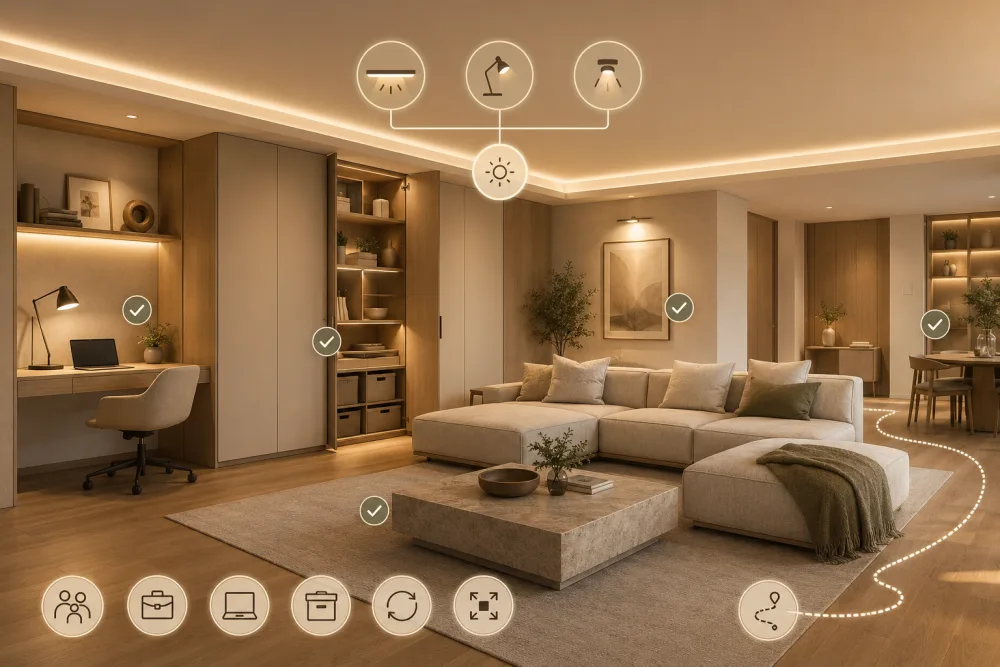
Use layered lighting that combines ambient, task and accent lights. Maintain a consistent colour temperature and illuminate important surfaces evenly. Thoughtful lighting makes the space feel cleaner, calmer and more refined.
10. Your Home Was Designed for Appearance, Not Daily Life
A home may look attractive when newly completed but become difficult to manage if it does not consider real routines.
Interior planning should account for how many people use the space, what they store, where they work and how their needs may change. The most successful interiors are not only beautiful—they are easy to live in and maintain.
A Clutter-Free Home Begins with Better Planning
A home that always looks cluttered does not necessarily need more cleaning or more cabinets. It needs better space planning, appropriately sized furniture, practical storage and a clear visual hierarchy.
At New Arch Studios, we design homes around the people who use them. From intelligent layouts and customised storage to lighting, materials and furniture planning, every decision is made to create interiors that remain organised, comfortable and visually refined.
Planning a home renovation or struggling with an inefficient layout? Contact New Arch Studios for practical, personalised interior design solutions.
