
Climate-Responsive Architecture: Designing Homes That Stay Cool in Indian Summers
Step outside on a May afternoon in North India and the heat feels almost tangible. The roads shimmer, concrete walls radiate warmth long after sunset, and air conditioners work overtime just to make indoor spaces bearable. For many homeowners, the solution seems obvious: install a bigger AC. But architecture has a different answer. Long before mechanical cooling existed, homes across India were designed to work with the climate rather than against it. Thick walls, shaded courtyards, carefully positioned openings, and natural ventilation created spaces that remained surprisingly comfortable even during intense summers.
Today, climate-responsive design is making a strong comeback. As energy costs rise and sustainability becomes a priority, working with a sustainable architect Delhi homeowners trust is increasingly about creating homes that feel naturally comfortable—not just technologically cooled.
What Is Climate-Responsive Architecture?
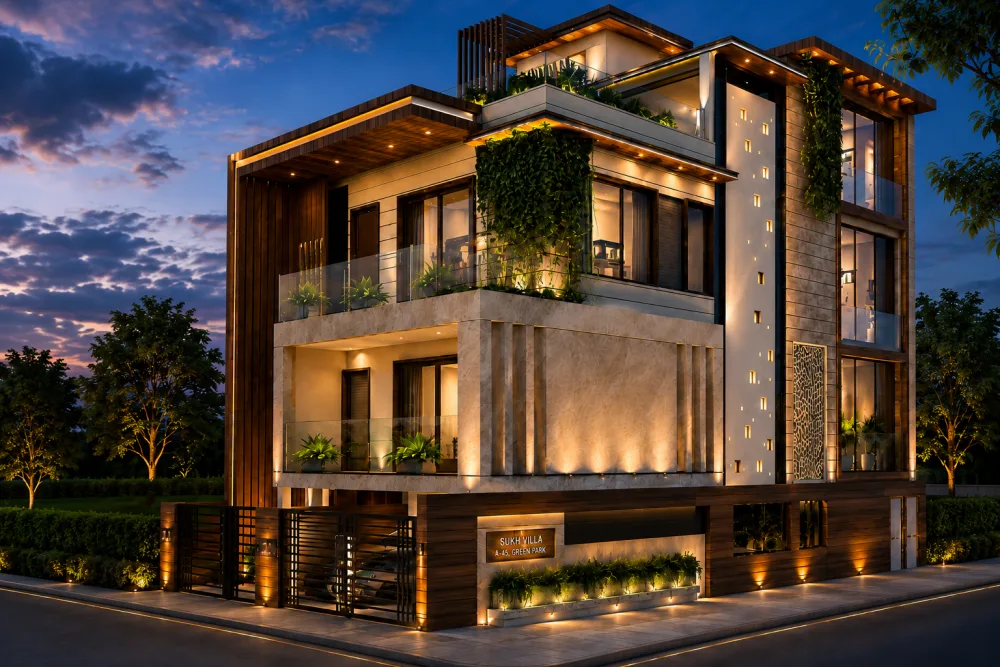
Climate-responsive architecture is the practice of designing buildings that respond directly to their environment. Instead of forcing indoor comfort through constant energy consumption, the architecture itself helps regulate temperature, daylight, airflow, and humidity.
The goal is simple: Create spaces that stay cooler in summer, warmer in winter, and consume less energy throughout the year.
For a city like Delhi, where temperatures can exceed 45°C during peak summer, this approach is not just sustainable—it is practical.
Why Modern Homes Often Feel Hotter Than They Should
Many contemporary homes prioritize aesthetics, large glass façades, and compact site utilization. While visually striking, these choices can unintentionally increase heat gain.
Common issues include:
Excessive west-facing glazing
Poor cross ventilation
Dark exterior materials that absorb heat
Lack of shading devices
Minimal landscape integration
The result is a home that constantly depends on artificial cooling.
Ironically, many traditional Indian homes solved these challenges decades ago through passive design strategies.
How Orientation Can Change Everything
One of the most powerful tools in architecture costs absolutely nothing.
Orientation.
The way a building is positioned on a site significantly influences how much heat it absorbs.
A thoughtfully oriented home can:
Reduce direct solar exposure
Improve natural airflow
Increase daylight without overheating interiors
Lower cooling requirements
This is why a green building architect Delhi NCR residents consult often studies sun paths and prevailing winds before developing the design.
"The most effective cooling strategy is often decided before construction even begins."
Good architecture begins long before walls are built.
Designing for Air, Not Just Space
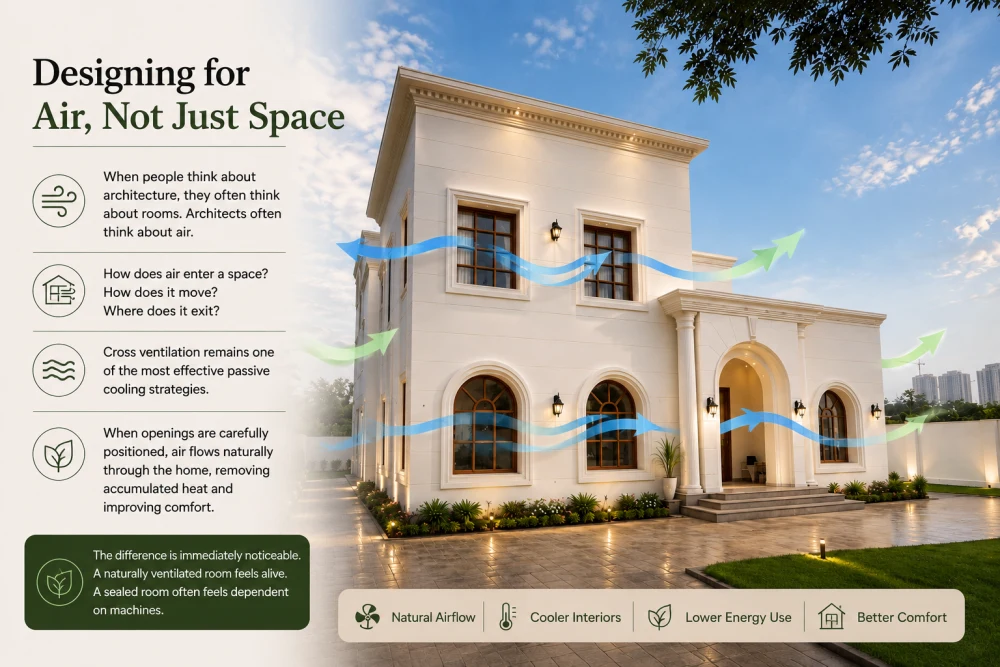
When people think about architecture, they often think about rooms. Architects often think about air. How does air enter a space? How does it move? Where does it exit? Cross ventilation remains one of the most effective passive cooling strategies. When openings are carefully positioned, air flows naturally through the home, removing accumulated heat and improving comfort.
The difference is immediately noticeable.
A naturally ventilated room feels alive. A sealed room often feels dependent on machines.
The Return of Courtyards and Transitional Spaces
There is a reason courtyards appear throughout India's architectural history.
They work.
Courtyards create microclimates, encourage airflow, and reduce indoor temperatures. They also establish a beautiful connection between indoor and outdoor living.
Similarly, verandahs, terraces, shaded balconies, and semi-open thresholds act as thermal buffers.
These spaces absorb and filter heat before it reaches interior rooms.
In contemporary homes, these traditional ideas can be reinterpreted in modern ways without compromising aesthetics.
Can Materials Make a Home Cooler?
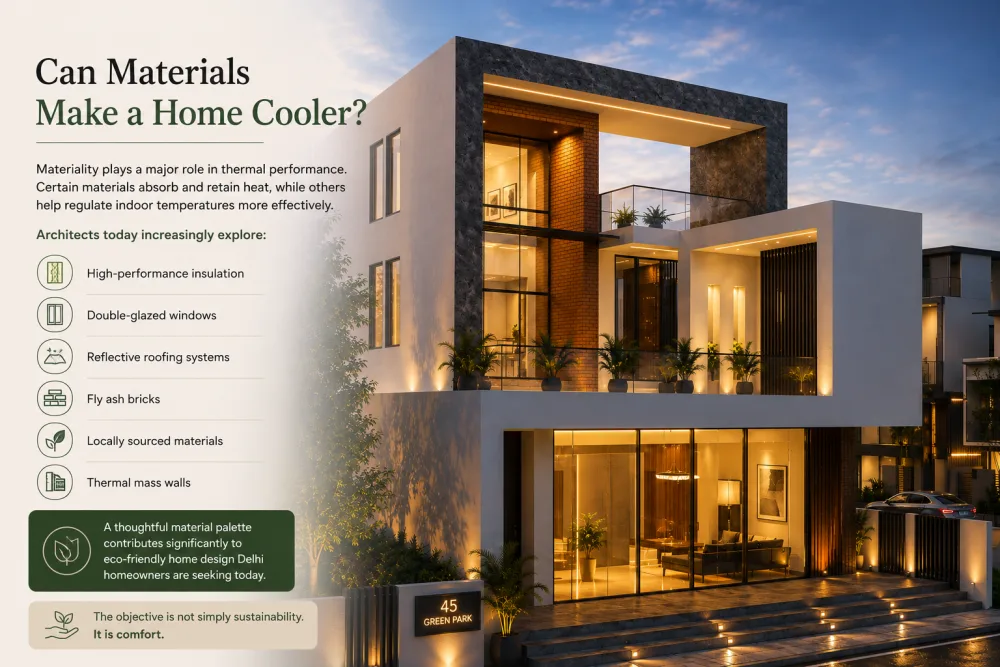
Materiality plays a major role in thermal performance.
Certain materials absorb and retain heat, while others help regulate indoor temperatures more effectively.
Architects today increasingly explore:
High-performance insulation
Double-glazed windows
Reflective roofing systems
Fly ash bricks
Locally sourced materials
Thermal mass walls
A thoughtful material palette contributes significantly to eco-friendly home design Delhi homeowners are seeking today.
The objective is not simply sustainability. It is comfort.
What Role Does Landscape Play?
A tree is one of the most underrated cooling systems available. Strategic landscaping can dramatically reduce ambient temperatures around a building. Shade from trees, green courtyards, water elements, and planted terraces can lower heat gain while improving visual quality.
This approach aligns closely with the principles embraced by many advocates of passive house design India is increasingly exploring. Nature is not an afterthought. It is part of the architecture.
What Does a Sustainable Architect in Delhi Actually Do?
A sustainable architect considers climate from the very first sketch.
Rather than treating sustainability as an add-on, it becomes part of the design process itself.
This includes:
Site analysis
Building orientation
Passive cooling strategies
Material selection
Daylight optimization
Energy efficiency
Water-conscious planning
The result is a home that performs better, consumes fewer resources, and feels more comfortable throughout the year.
Building Homes for the Climate We Actually Live In
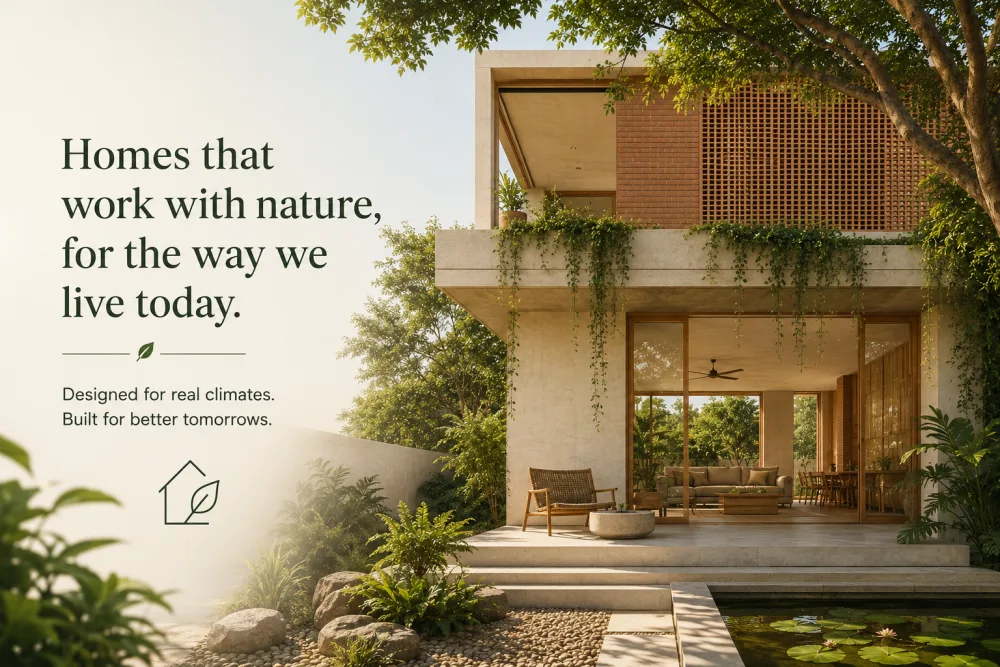
Indian summers are unlikely to become milder anytime soon. If anything, rising temperatures make climate-responsive design more relevant than ever. The future of residential architecture is not about creating sealed boxes that rely entirely on technology. It is about designing spaces that understand their environment.
The most successful homes are not the ones that fight nature. They are the ones that work with it.
For homeowners planning a new residence, renovation, or custom home, partnering with a sustainable architect Delhi families trust can help create spaces that remain comfortable, efficient, and deeply connected to their surroundings.
Because good architecture is not only about how a home looks.
It is also about how it feels on the hottest day of the year.
Let's Talk About Your Space
At NewArchStudios, we believe thoughtful architecture begins with understanding climate, context, and the people who will live within the space. If you're planning a home in Delhi NCR, let's start a conversation about creating a design that stays comfortable for decades to come.