
The Psychology of Colours in Interior Design: Creating Spaces That Feel Right
Walk into a room painted in deep blue and you may instantly feel calm. Step into a bright yellow kitchen and the space suddenly feels energetic and social. These reactions aren't accidental. They are deeply connected to interior color psychology, a design principle that influences how we experience spaces emotionally and physically.
At New Arch Studios, we often find that materials, light, scale, and color work together to shape the character of a home. While furniture and finishes define functionality, color quietly affects mood, perception, and behavior. Understanding how colors influence us can help create more thoughtful and meaningful living environments.

What Is Interior Color Psychology?
Interior color psychology refers to the study of how different colors influence human emotions, behaviors, and perceptions within a space. Colors can make rooms feel larger or smaller, warmer or cooler, calming or stimulating. While personal preferences and cultural associations matter, certain psychological responses to color are remarkably consistent across different environments. For architects and designers, color is not simply decoration—it's a spatial tool that shapes how people experience a home every day.
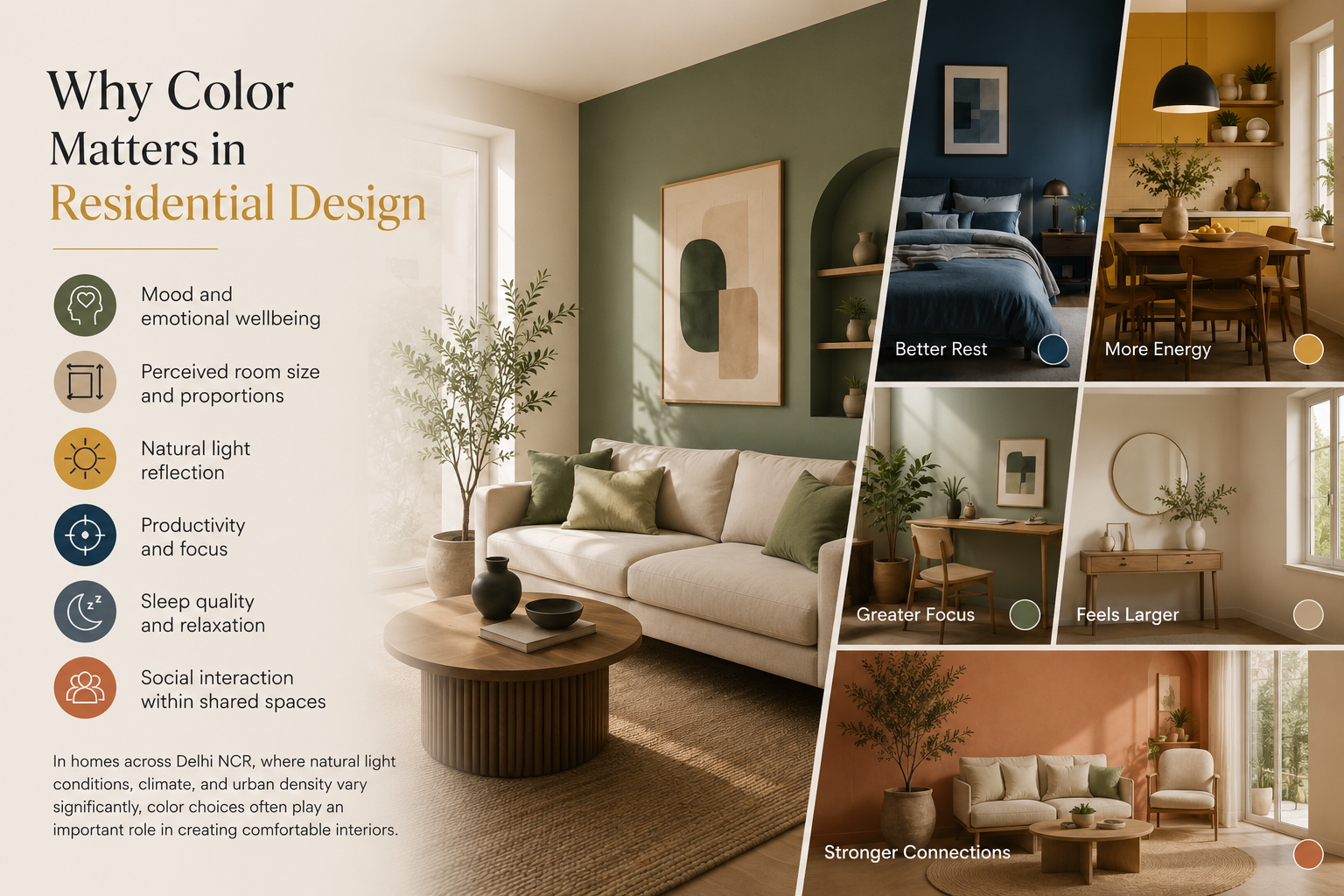
Why Color Matters in Residential Design
A successful interior is never just about aesthetics. Color affects:
Mood and emotional wellbeing
Perceived room size and proportions
Natural light reflection
Productivity and focus
Sleep quality and relaxation
Social interaction within shared spaces In homes across Delhi NCR, where natural light conditions, climate, and urban density vary significantly, color choices often play an important role in creating comfortable interiors.
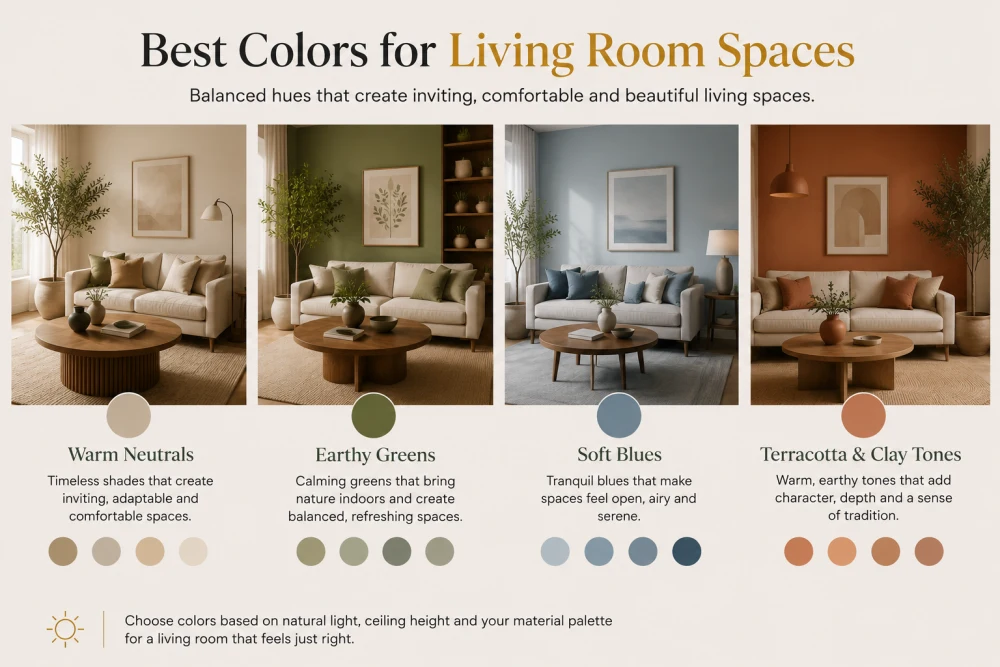
Best Colors for Living Room Spaces
The living room is often the social heart of the home. It requires a balance between comfort, warmth, and visual interest.
Warm Neutrals
Soft beige, greige, sand, and warm white create inviting environments that feel timeless and adaptable. These shades work particularly well in contemporary Delhi apartments where flexibility and longevity are important.
Earthy Greens
Muted olive, sage, and eucalyptus tones bring a sense of calm while maintaining a connection to nature. They pair beautifully with wood, stone, and natural textures, making them a popular choice for modern homes.
Soft Blues
Blue is often associated with tranquility and balance. Lighter shades can make living spaces feel open and airy while maintaining sophistication.
Terracotta and Clay Tones
Inspired by traditional materials and vernacular architecture, these colors introduce warmth and character without overwhelming the space. When considering the best colors for living room design, it's important to evaluate natural light, ceiling height, and the overall material palette rather than following trends alone.
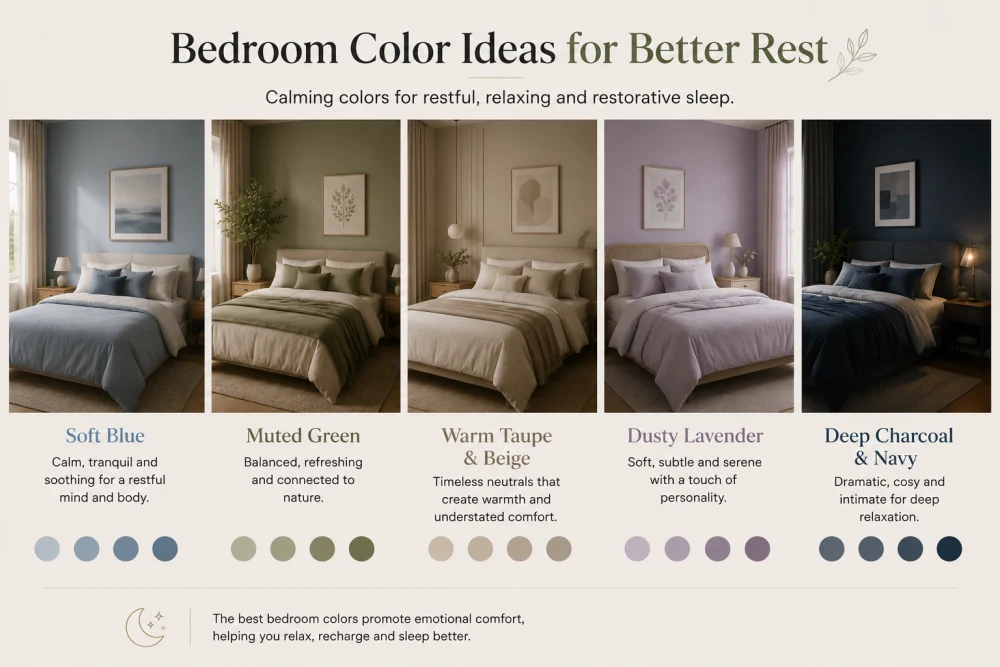
Bedroom Color Ideas for Better Rest
Bedrooms serve a different purpose from social spaces. Here, the objective is often relaxation, comfort, and restorative sleep. Soft Blue
Research consistently associates blue with calmness and relaxation. It can create a soothing atmosphere ideal for unwinding after a busy day.
Muted Green
Green represents balance and nature, making it one of the most effective choices for restful bedroom environments.
Warm Taupe and Beige
Neutral palettes remain popular because they feel calm, adaptable, and timeless.
Dusty Lavender
Subtle lavender tones can introduce softness and personality while maintaining a serene atmosphere.
Deep Charcoal and Navy
For those who prefer dramatic interiors, darker tones can create a cocoon-like environment when balanced with adequate lighting. Among the most successful bedroom color ideas, the common thread is emotional comfort rather than visual excitement.
Creating Balanced Home Color Schemes
A home rarely consists of a single color. The challenge lies in creating cohesive home color schemes that connect different rooms while allowing each space to maintain its own identity.
Start with a Base Palette
Choose one or two foundational neutral tones that can flow throughout the home.
Add Accent Colors Strategically
Accent colors work best when used intentionally through feature walls, furniture, artwork, or textiles.
Consider Natural Light
North-facing rooms often benefit from warmer palettes, while sun-filled spaces can comfortably accommodate cooler tones.
Connect Colors Through Materials
Wood, stone, metal, and fabric selections can help unify multiple colors into a cohesive design language.

Think About Transitions
Colors should support the movement between spaces rather than creating abrupt visual breaks.
The Role of Color in Modern Delhi NCR Homes
Homes in Delhi, Gurgaon, Noida, Faridabad, and Ghaziabad often experience varied lighting conditions, compact urban footprints, and evolving lifestyle needs.
As a result, contemporary interiors increasingly rely on carefully considered color palettes that:
Maximize perceived spaciousness
Enhance natural light
Support multifunctional living
Complement sustainable material choices
Create a sense of calm within busy urban environments This is where interior color psychology becomes particularly valuable. The right palette can dramatically improve how a space feels without changing its physical dimensions.
Beyond Trends: Choosing Colors That Last
Color trends come and go. What remains constant is the emotional relationship people develop with their homes. Instead of selecting colors solely because they are fashionable, consider:
How you want a room to feel
Daily activities within the space
Existing architecture and materiality
Long-term adaptability
The most successful interiors are often those where color quietly supports life rather than demanding attention.
Conclusion
Understanding interior color psychology allows homeowners to move beyond aesthetics and create spaces that genuinely support wellbeing, comfort, and daily living. Whether you're exploring the best colors for living room design, searching for calming bedroom color ideas, or developing cohesive home color schemes, thoughtful color choices can transform how a home feels and functions. At New Arch Studios, we believe that color is an integral part of architecture—not an afterthought. When combined with light, materiality, and spatial planning, the right palette can create interiors that feel deeply personal and enduring.

Let's start a conversation about your space and explore how thoughtful design can shape the way you live.