
Lighting, Color & Scale: The Fine Details That Transform a Home from Beautiful to Breathtaking
Luxury in architecture and interiors is rarely about excess. More often, it emerges through restraint, precision, and an understanding of how people experience space. The difference between a room that feels pleasant and one that feels unforgettable often lies in details that are carefully considered but never immediately obvious.
In every successful minimalist interior design Delhi home, there is a thoughtful orchestration of light, color, proportion, and visual hierarchy. These elements work together to create atmosphere, define character, and elevate everyday experiences. Whether designing a contemporary apartment in Gurgaon, a villa in Noida, or a family home in South Delhi, the principles remain remarkably consistent.
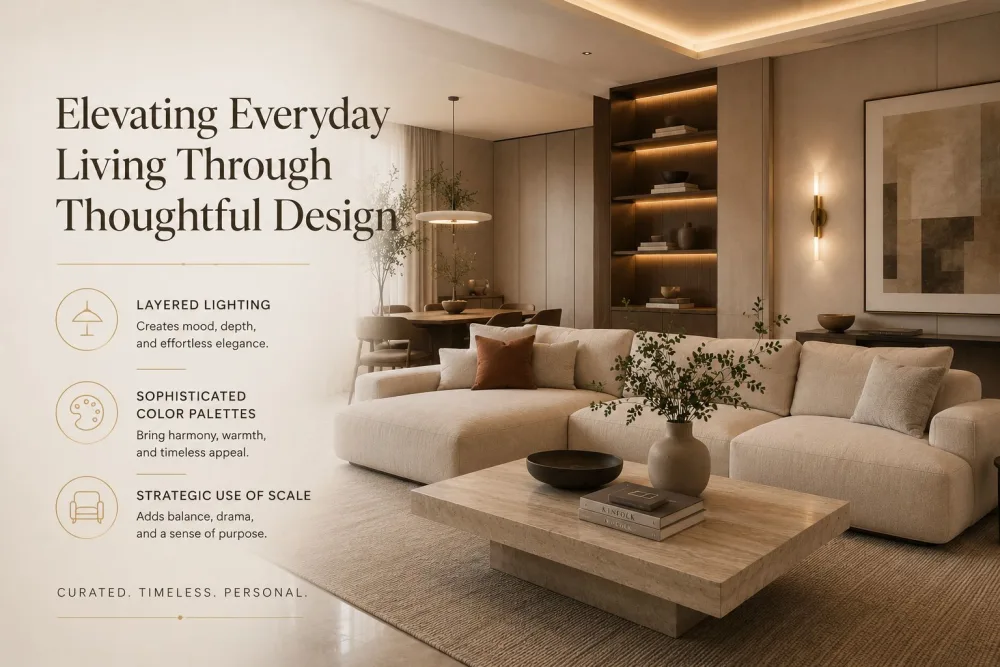
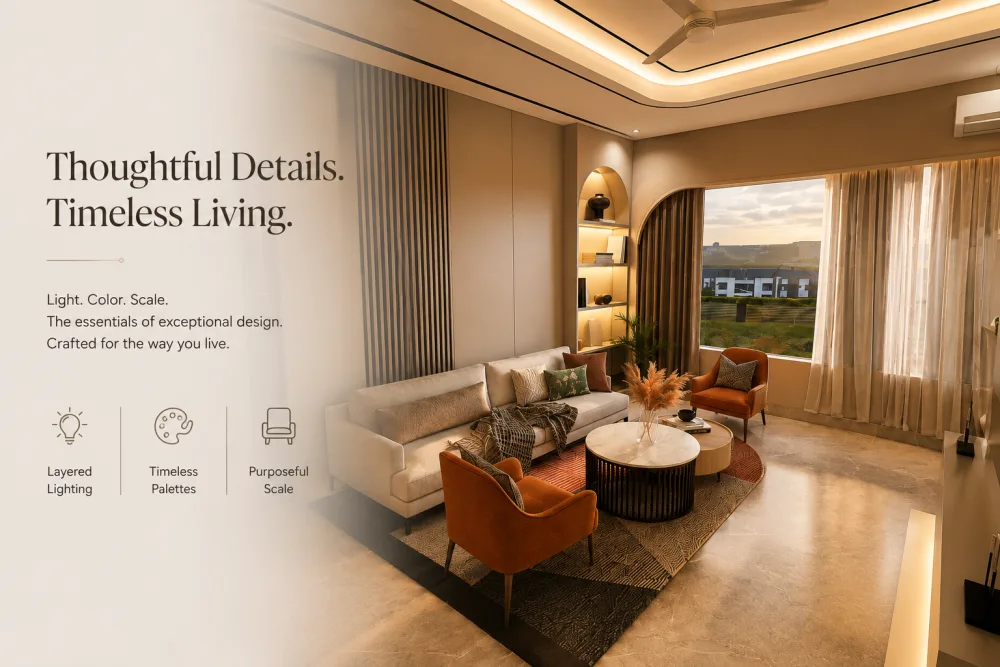
Three design tools consistently separate exceptional interiors from ordinary ones: layered lighting, sophisticated color palettes, and the strategic use of scale.
When thoughtfully combined, they create spaces that feel curated, timeless, and deeply personal.
Why Luxury Is Built Through Details
Many homeowners focus first on furniture, finishes, or decorative accessories. While these elements matter, they are only part of the equation.
The most compelling interiors are designed holistically. Light shapes perception. Color influences mood. Scale creates impact. Together, they establish a visual language that feels cohesive and intentional.
Rather than adding more objects, luxury often comes from refining what already exists and ensuring every element serves a purpose.
Lighting Architecture: Creating High-End Drama Through Layers
Lighting is arguably the most powerful design tool available to architects and interior designers. It influences how materials appear, how rooms feel, and even how occupants interact with a space.
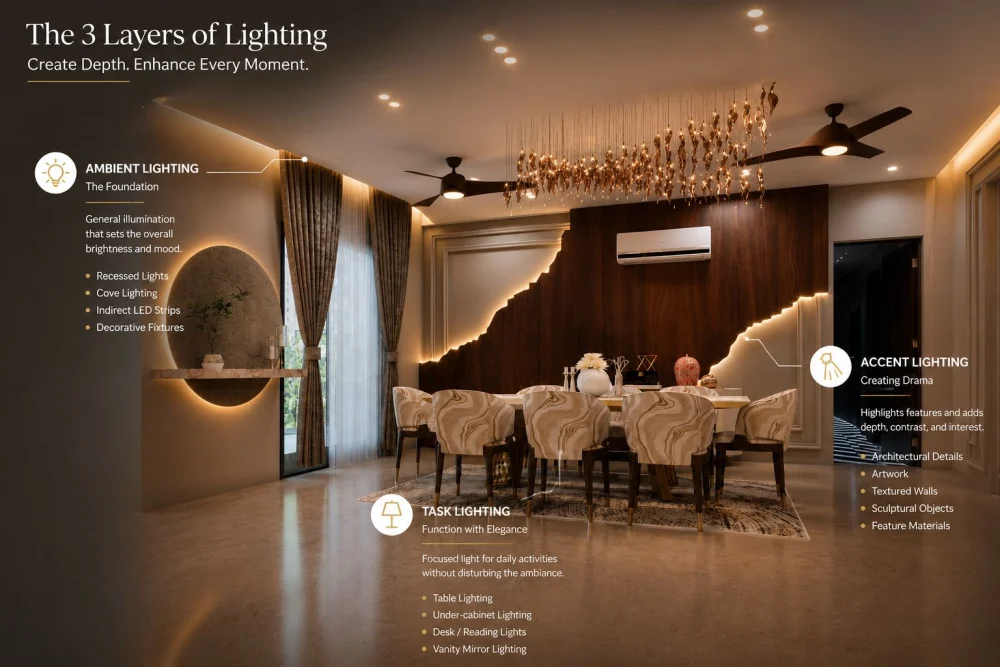
A single ceiling fixture may illuminate a room, but it rarely creates atmosphere. High-end interiors rely on layered lighting strategies that combine ambient, task, and accent lighting.
Understanding the Three Layers of Light
Ambient Lighting: The Foundation
Ambient lighting provides the overall illumination for a room. It establishes the baseline brightness and ensures comfortable visibility.
Examples include:
Recessed ceiling lights
Cove lighting
Indirect LED strips
Decorative ceiling fixtures
In luxury interiors, ambient lighting is rarely harsh or uniform. Instead, it is diffused and carefully distributed to create warmth and visual comfort.
Task Lighting: Function with Elegance
Task lighting supports specific activities such as reading, cooking, working, or grooming.
Common examples include:
Bedside lamps
Kitchen under-cabinet lighting
Study desk lights
Vanity mirror lighting
The goal is to provide focused illumination without disrupting the overall ambiance of the room.
Accent Lighting: Creating Drama
Accent lighting introduces depth, contrast, and visual interest.
It highlights:
Architectural details
Artwork
Textured walls
Sculptural objects
Feature materials
This layer is often what transforms a well-designed room into a memorable one.
How Layered Lighting Creates Luxury
The most successful lighting schemes never rely on a single source.
Imagine a living room where soft cove lighting washes the ceiling, floor lamps create intimate reading zones, and focused accent lights illuminate artwork. The space instantly gains dimension and sophistication.
This layered approach allows homeowners to adjust mood throughout the day while creating a richer spatial experience.
Common Lighting Mistakes to Avoid
Overlighting the Space
Brighter is not always better. Excessive lighting can flatten textures and eliminate the shadows that create visual depth.
Ignoring Dimmers
Dimmers provide flexibility and allow spaces to transition effortlessly from functional to atmospheric.
Choosing Fixtures Too Late
Lighting should be integrated during the design phase rather than treated as a finishing touch.
For homeowners seeking guidance from an interior designer in Delhi NCR, lighting planning is often one of the highest-value investments in a project.
Curating the Perfect Palette: Timeless Color Stories That Feel Luxurious
Color is often the first thing people notice when entering a room. Yet sophisticated interiors rarely depend on bold trends or dramatic statements.
Instead, they rely on carefully layered palettes that remain relevant for years.
What Makes a Color Palette Feel Luxurious?
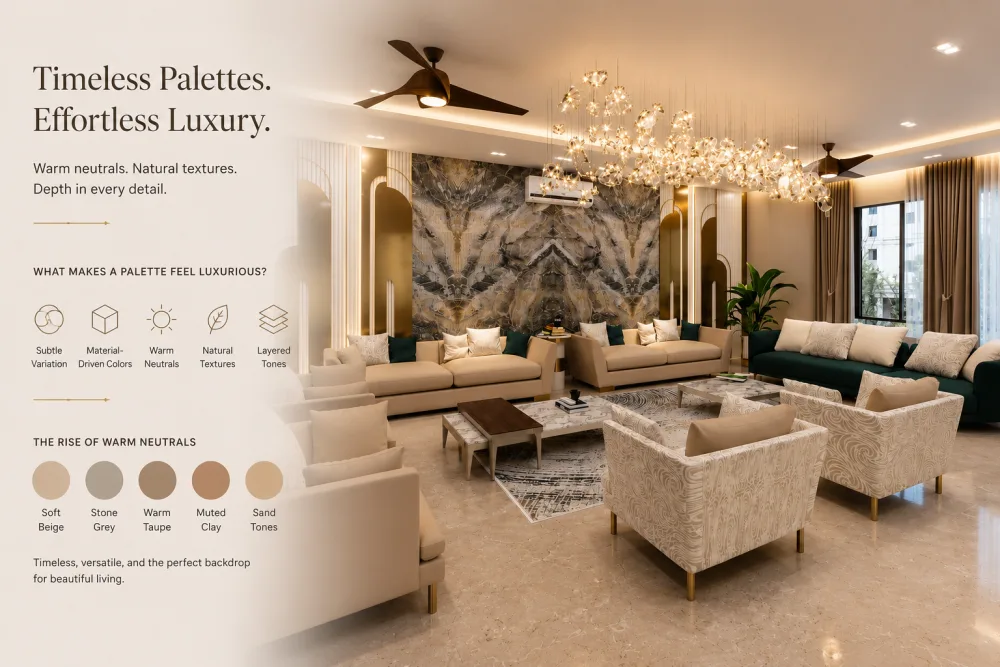
Luxury interiors typically prioritize depth over contrast.
Rather than pairing unrelated colors, designers create tonal relationships that feel cohesive and calming.
Characteristics often include:
Subtle variation
Material-driven colors
Warm neutrals
Natural textures
Layered tones
The result is a space that feels intentional rather than decorated.
The Rise of Warm Neutrals
Across Delhi NCR, warm neutrals continue to dominate premium residential interiors.
Popular choices include:
Soft beige
Stone grey
Warm taupe
Muted clay
Sand tones
These colors create a timeless backdrop while allowing furniture, artwork, and architectural elements to become focal points.
Creating Depth Without Clutter
A common misconception is that minimalist spaces lack personality.
In reality, the best minimalist interior design Delhi home projects use subtle color variation to create richness.
For example:
Textured plaster walls
Natural wood finishes
Linen upholstery
Stone surfaces
Brushed metal accents
When layered thoughtfully, these materials generate visual interest without overwhelming the room.
Timeless Color Combinations Designers Trust

Warm White + Oak + Black Accents
Clean, contemporary, and versatile.
Greige + Walnut + Bronze
A refined palette that balances warmth and sophistication.
Soft Clay + Travertine + Natural Linen
Perfect for homeowners seeking an understated luxury aesthetic.
The Power of Scale: Making a Statement Without Overwhelming the Room
One of the most overlooked principles in interior design is scale.
A room can contain beautiful furniture and premium materials yet still feel underwhelming if proportions are not properly considered.
Why Scale Matters
Large spaces require visual anchors.
Without them, interiors can feel fragmented and lack focus.
Strategic use of scale helps:
Establish hierarchy
Define focal points
Improve visual balance
Create memorable moments
The Case for Oversized Art
Many homeowners choose artwork that is too small for their walls.
Oversized pieces often create a stronger and more sophisticated visual impact.
When selecting large-scale art:
Align artwork with furniture proportions
Leave breathing room around the edges
Consider viewing distance
Prioritize emotional resonance
A single statement piece often performs better than multiple smaller artworks competing for attention.
Statement Décor Without Visual Noise
Luxury interiors embrace restraint.
Rather than filling every surface, designers focus on fewer but more meaningful pieces.
Examples include:
Sculptural floor lamps
Oversized ceramic vessels
Large mirrors
Statement coffee tables
Architectural shelving
The objective is not decoration for its own sake but purposeful visual emphasis.
Balancing Large Elements
Oversized objects work best when balanced by negative space.
A large artwork can feel elegant because the surrounding wall remains uncluttered.
Similarly, a dramatic chandelier becomes more impactful when the room beneath it is visually calm.
Scale in Apartment Living
Many homeowners assume scale is only relevant in large villas.
In reality, some of the best living room design ideas Delhi apartment projects use carefully selected oversized elements to make smaller spaces feel more expansive.
One large artwork, for example, often creates more visual order than a collection of smaller decorative pieces.
Bringing Lighting, Color, and Scale Together
Exceptional interiors are rarely defined by a single design move.
The magic happens when multiple elements reinforce one another.
A warm neutral palette becomes more compelling under layered lighting. Oversized artwork gains impact when illuminated correctly. Statement pieces feel intentional when balanced within a cohesive color story.
This integration is where architecture and interior design truly intersect.
For homeowners considering an architect consultation Delhi NCR, understanding how these principles work together can significantly influence the quality and longevity of a project.
Conclusion
Creating a truly memorable home goes beyond selecting beautiful furniture or premium finishes. The most refined interiors emerge through the thoughtful orchestration of light, color, and scale. By embracing layered lighting, developing timeless color palettes, and confidently incorporating statement pieces, homeowners can transform ordinary rooms into extraordinary experiences. These principles form the foundation of every successful minimalist interior design Delhi home, helping spaces feel both elegant and deeply personal.
At New Arch Studios, we believe great design is found in the details—the subtle decisions that shape how a space feels every day. Whether you're building a new home, renovating an apartment, or refining an existing interior, the right design strategy can elevate every corner of your living environment.
Let's talk about your space and explore how thoughtful architecture and interior design can bring lasting sophistication to your home.