
12 Space Planning Tips That Make Small Homes Feel Larger
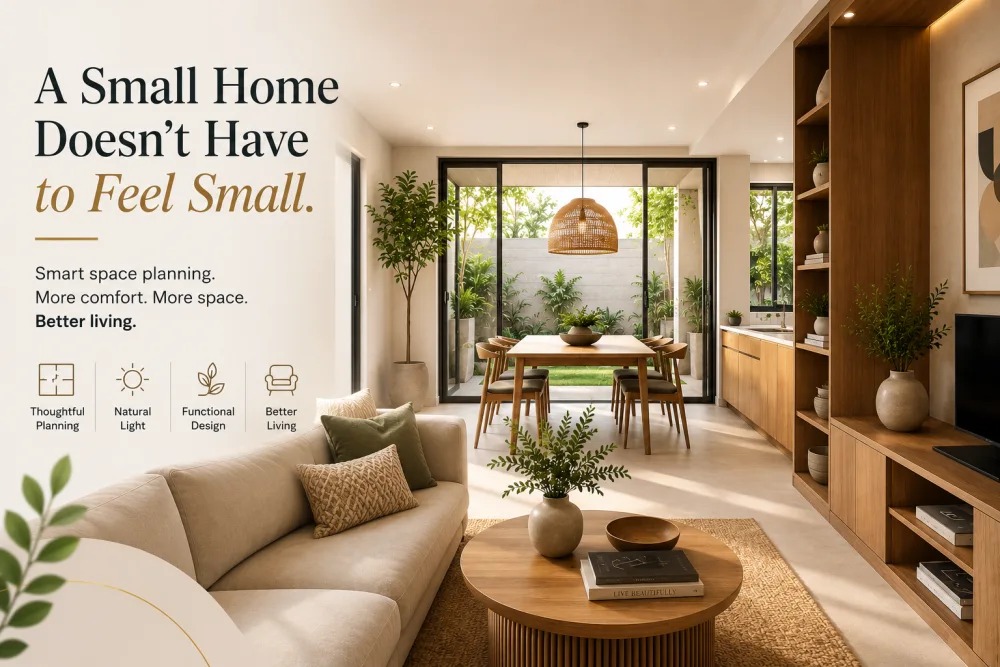
A small home doesn't have to feel small.
Some of the most memorable homes are not the largest ones. They are the homes where every corner feels intentional, every transition feels effortless, and every room seems to hold more space than its dimensions suggest. Good architecture is rarely about square footage alone—it is about how space is organized, experienced, and connected.
As a custom home design architect Noida homeowners often consult during the planning stage, one lesson becomes clear very quickly: thoughtful space planning can transform even a compact home into a place that feels generous, comfortable, and deeply functional.
Here are 12 space planning principles that can make a small home feel significantly larger without adding a single square foot.
What Is Space Planning in Residential Architecture?
Space planning is the process of organizing rooms, circulation, furniture, storage, and functions within a home to create a better living experience.
A well-planned home feels larger because movement is intuitive, natural light travels freely, and every area serves a purpose. Rather than relying on size alone, architecture uses proportion, volume, and spatial relationships to create a sense of openness.
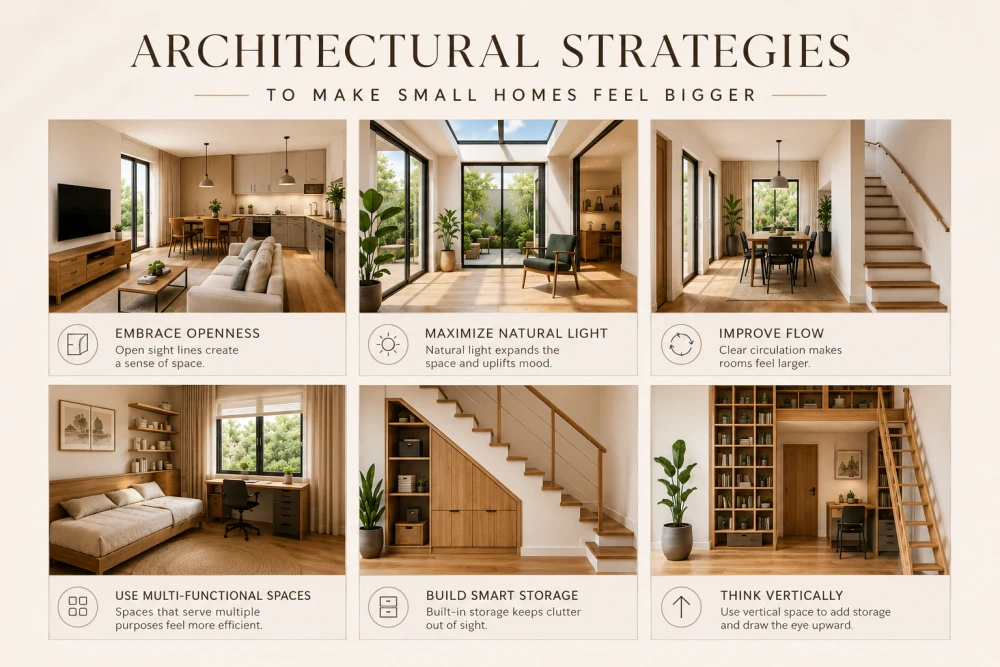
1. Prioritize Open Sight Lines
The farther your eye can travel, the larger a space feels. Avoid unnecessary partitions that interrupt visual connections between living, dining, and kitchen areas. Even partial openness can dramatically improve the perception of space. In many Delhi NCR homes, replacing solid walls with wider openings creates a stronger sense of continuity while preserving functionality.
2. Design Around Natural Light
Natural light is one of the most powerful spatial tools available to architects. A room filled with daylight appears larger, brighter, and more inviting. Position openings carefully and allow light to move through multiple spaces whenever possible. Thoughtful placement of windows, courtyards, skylights, or double-height volumes can transform compact interiors.
3. Reduce Circulation Space
Corridors are necessary, but excessive circulation often wastes valuable square footage. Instead of long hallways, integrate circulation into living spaces wherever possible. A carefully planned layout can reclaim significant usable area without affecting comfort. This is a principle many homeowners discover during an architect consultation Delhi NCR projects often require.
4. Use Multi-Functional Spaces
Modern homes need flexibility. A guest room can double as a study. A dining space can become a work zone. A window seat can incorporate hidden storage. When one space serves multiple functions, the overall footprint can remain compact while supporting a wider range of activities.
5. Create Built-In Storage
Clutter makes spaces feel smaller than they actually are. Built-in storage integrated into walls, staircases, seating, and furniture reduces visual noise and maximizes usable floor area. Good storage design should feel like part of the architecture rather than an afterthought.
6. Think Vertically
When floor area is limited, volume becomes important. Tall bookshelves, full-height wardrobes, loft storage, and vertical design elements draw the eye upward, creating a stronger sense of scale. Even modest rooms can feel more expansive when their vertical dimension is emphasized.
7. Maintain Consistent Flooring
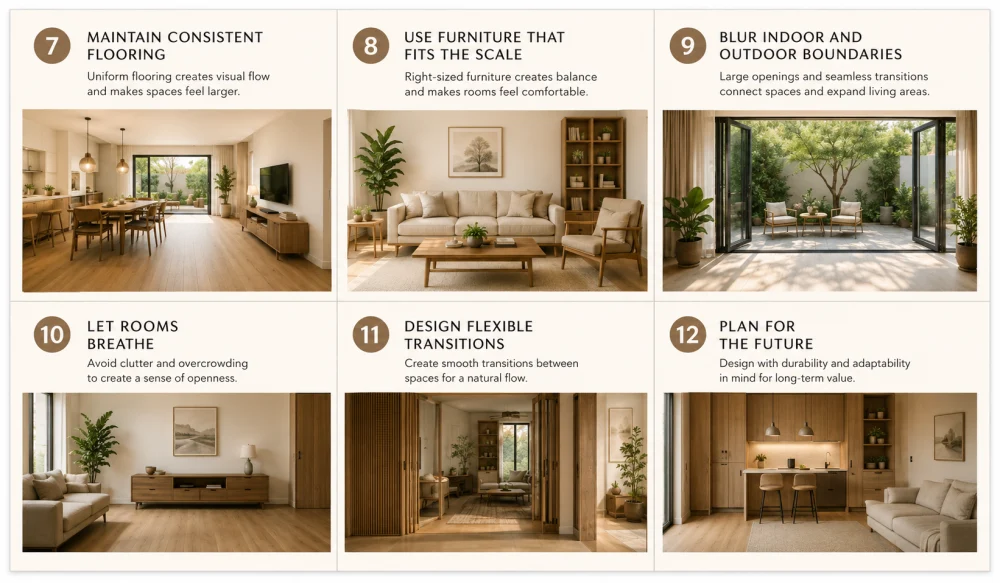
Using the same flooring material across connected spaces creates visual continuity. When living, dining, and circulation areas share a common surface, the boundaries between rooms become less pronounced, making the home feel larger. Material consistency is often more effective than introducing multiple finishes in smaller homes.
8. Use Furniture That Fits the Scale
Oversized furniture can overwhelm a compact room. Instead, choose pieces proportionate to the available space while maintaining comfort and functionality. Well-scaled furniture improves circulation and preserves visual balance. Architecture and interiors should work together to create a coherent spatial experience.
9. Blur Indoor and Outdoor Boundaries
A small home can borrow visual space from its surroundings. Courtyards, terraces, balconies, and landscaped pockets extend the perception of interior space beyond the building envelope. This approach is particularly effective in custom home projects where site planning and architecture are developed together.
10. Let Rooms Breathe
Not every corner needs to be filled. Strategic negative space allows important elements to stand out while making rooms feel calmer and more spacious. A carefully placed empty area often contributes more to the quality of a room than an additional piece of furniture.
11. Design Flexible Thresholds
Thresholds define how one space transitions into another. Sliding partitions, movable screens, and adaptable openings allow rooms to expand or contract depending on daily needs. This flexibility helps smaller homes accommodate changing lifestyles without feeling constrained.
12. Plan for the Future
The best small homes evolve over time. Whether it is accommodating a growing family, changing work patterns, or future renovations, flexibility should be built into the design from the beginning. A thoughtful layout reduces the need for disruptive changes later and ensures the home remains functional for years to come.
Why Good Space Planning Matters More Than Square Footage
Many homeowners assume that increasing area is the only way to improve comfort. In reality, the quality of a home often depends more on planning than size. A carefully designed 1,500-square-foot home can feel more spacious, efficient, and enjoyable than a poorly planned home that is significantly larger. This is where the expertise of a custom home design architect Noida homeowners work with becomes valuable. Through thoughtful organization of light, circulation, storage, and spatial relationships, architecture can create homes that feel generous regardless of their footprint.
Conclusion
Making a small home feel larger is not about visual tricks or temporary solutions. It is about designing spaces that work intelligently, respond to everyday life, and use every square foot with purpose. Whether you are planning a new residence, renovating an existing property, or exploring ideas for a future home, thoughtful space planning can dramatically improve how a home feels and functions. Working with a custom home design architect Noida residents trust can help unlock possibilities that are often hidden within the footprint you already have.
At New Arch Studios , we believe great architecture is not measured by size but by how beautifully a space supports the people who live within it.
Let's start a conversation about your project.